
Phonics for Kids: How to Build Early Reading and Spelling Skills
Helping children learn to read is an important part of early education. Young learners need to understand how letters represent sounds and how these sounds combine to form words. Phonics helps children develop these skills through letter-sound recognition, blending and spelling practice.
With regular practice, fun activities and suitable learning resources, parents can support their children's early reading journey. The key is to make learning interactive, enjoyable and appropriate for their age.
At Ninjas Bookland, parents can explore phonics books for kids, letter-sound storybooks and English learning resources to support early literacy development.
What Is Phonics and Why Is It Important for Kids?
Phonics teaches children the relationship between letters and sounds. For example, children learn that the letters c, a and t represent individual sounds that can be blended to read the word cat.
Learning phonics helps children sound out unfamiliar words instead of relying only on memorisation. It also supports early spelling by helping them connect spoken sounds with written letters.
As children practise, they gradually become more confident recognising letters, reading simple words and attempting independent reading. Phonics works best alongside shared reading, vocabulary development, speaking activities and listening to stories.
At What Age Should Children Start Learning Phonics?
Children develop language and literacy skills at different rates. Younger children can begin with rhymes, songs and picture books, while preschoolers may become ready for letter sounds and simple word activities.
Around ages 3–4, parents can introduce familiar letters and beginning sounds through games. Between ages 4–6, many children can gradually explore sound blending, short words and structured phonics exercises, depending on their readiness.
These are general guidelines rather than strict milestones. Keep activities simple and introduce new concepts when your child is comfortable with the skills they have already learned.
10 Easy Ways to Teach Phonics at Home
1. Start With Letter Sounds
Introduce a few familiar letters and demonstrate their common sounds. Connect each sound with an everyday word, such as m in moon. Practise regularly without introducing too many unfamiliar letters at once.
2. Play Beginning-Sound Games
Choose familiar objects and ask your child to identify their first sound. For example, ball begins with /b/, sun with /s/ and fish with /f/. These simple games help children connect spoken words with sounds.
3. Practise Sound Blending
Blending means joining individual sounds to read a word. Start with simple words such as cat, map and sun. Say each sound slowly and help your child combine them into the complete word.
4. Use Rhyming Words
Play with rhyming words such as cat, hat and mat. Ask your child to identify words that sound similar at the end. Rhyming games develop sound awareness and make early literacy practice enjoyable.
5. Introduce Short-Vowel Words
Once children recognise familiar letter sounds, practise simple words such as pen, sit, dog and cup. Encourage them to identify each sound and blend the sounds together.
6. Read Picture Books Together
Choose picture books with simple, age-appropriate text. Point out familiar letters and sounds occasionally, but allow your child to enjoy the story without constant interruptions.
7. Use Alphabet Cards
Alphabet cards and magnetic letters help children recognise and arrange letters. For example, use the letters s, a and t to build sat. Change a letter to create another word when your child is ready.
8. Practise With Everyday Objects
Use household objects to create learning opportunities. Ask your child to find something beginning with /b/ or identify the first sound in cup. Everyday activities can reinforce phonics naturally.
9. Introduce Simple Spelling
Once your child understands some letter sounds, encourage them to spell familiar words. For example, help them identify the sounds in dog and choose the letters that represent them.
10. Keep Practice Short and Consistent
Begin with around 5–10 minutes of focused practice if that suits your child's attention span. Combine a letter-sound game, a few simple words and a short reading activity. Praise effort and progress rather than expecting perfect answers.
Fun Phonics Activities for Preschoolers
Simple games can make learning more interesting and help children practise important reading skills.
Sound Hunt: Choose a sound such as /b/ and ask your child to find objects beginning with that sound, such as a book, ball or bag.
Build a Word: Use letter cards to create a simple word such as cat. Say the sounds together, arrange the letters and blend them to read the word.
Rhyming Game: Choose a word such as hat and ask your child to think of rhyming words. Picture cards can help younger learners participate.
Letter and Picture Matching: Show a picture of a fish and ask your child to find the letter associated with its beginning sound.
Read, Say and Write: Read a simple word together, identify its sounds and invite your child to trace or copy the letters if they are ready.
These activities can be adjusted to suit your child's age, interests and current reading skills.
How to Choose the Best Phonics Books for Kids
The best phonics book should match your child's learning level and introduce skills gradually. Beginners may benefit from letter-sound recognition and picture matching, while children who already know common sounds may be ready for blending and simple spelling exercises.
Choose books with clear examples, easy instructions and age-appropriate activities. Short stories and relevant illustrations can also help children stay interested.
Avoid selecting a book simply because it has more pages or advanced exercises. A suitable resource should support your child's next learning step and complement reading together, conversation and everyday learning activities.
Recommended Phonics Books at Ninjas Bookland
Parents can browse the English Books for Kids collection at Ninjas Bookland to explore available phonics and early English learning resources.
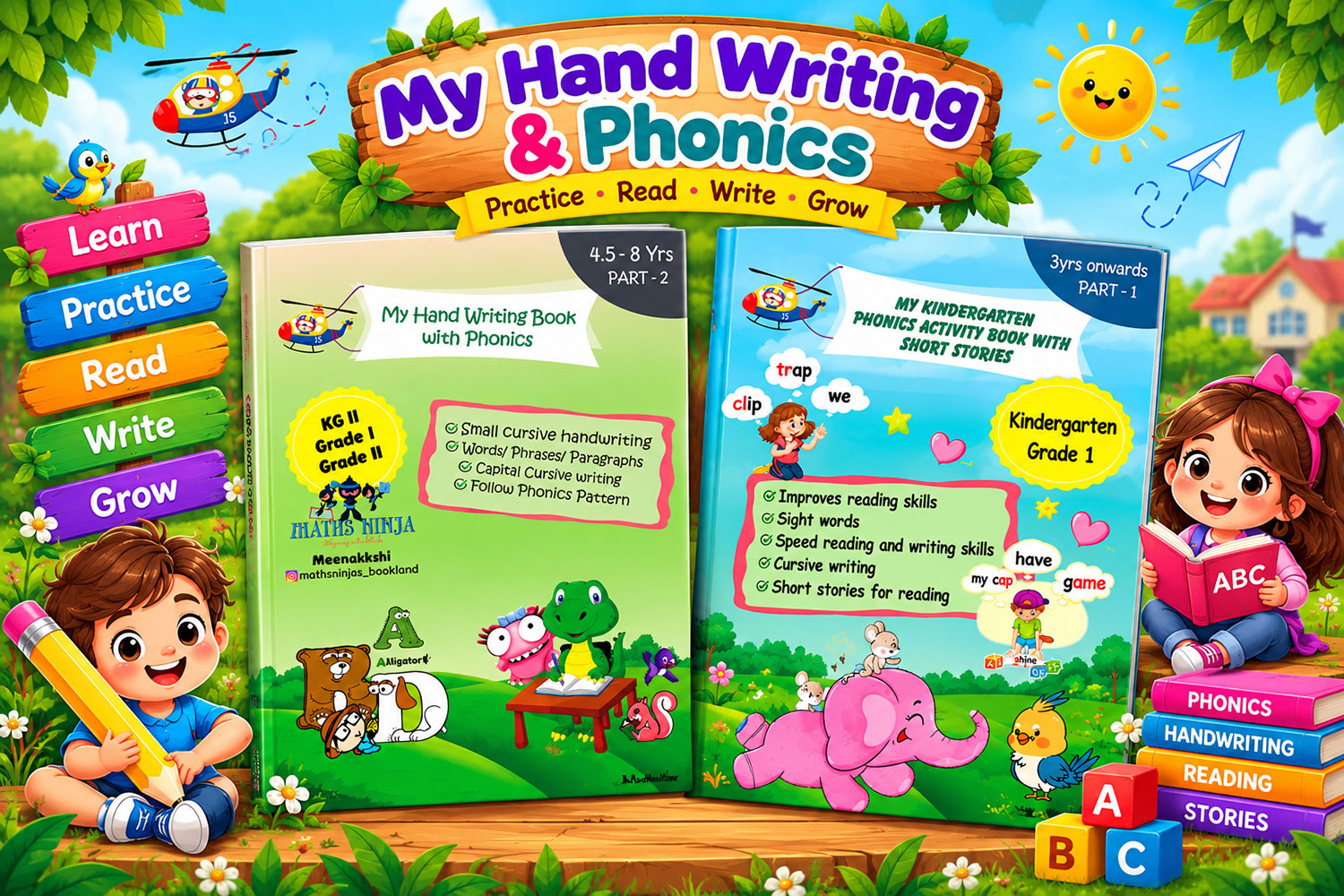
Some listed options include the LKG/Nursery English Phonics Letter Sound Story Book With Exercises, which combines letter-sound stories with activities, and My Kindergarten Phonics Spellings Rule Book With Short Stories, which focuses on spelling rules and short-vowel sounds.
Ninjas Bookland also lists an English Phonics Cursive Writing Book for early writing practice.
Ninjas Bookland also lists an English Phonics Cursive Writing Book for early writing practice.
Review each product description before purchasing to ensure that the book matches your child's current skills and learning needs.
A Simple 7-Day Phonics Practice Plan
| Day | Activity |
|---|---|
| Monday | Practise familiar letter sounds |
| Tuesday | Play a beginning-sound game |
| Wednesday | Read a picture book together |
| Thursday | Blend simple three-sound words |
| Friday | Play a rhyming game |
| Saturday | Complete a phonics workbook activity |
| Sunday | Review familiar sounds through play |
Keep sessions short and flexible. The goal is to build confidence through regular practice rather than complete a fixed number of exercises every day.
Common Mistakes Parents Should Avoid
Avoid introducing too many sounds at once or rushing children into difficult spelling exercises. Allow time to practise familiar concepts before adding new ones.
Do not rely only on memorisation. Encourage children to sound out simple words, and choose books that match their abilities. Avoid comparing your child with others or correcting every mistake immediately.
Continue reading stories together to develop vocabulary, listening comprehension and a love of books. If your child experiences persistent difficulty learning early reading skills, consult their teacher or a qualified literacy professional.
