
How to Improve Your Child’s Handwriting: Easy Tips for Preschoolers
Good handwriting is an important early learning skill that helps children recognise letters, express their thoughts and prepare for school. During the preschool years, children gradually develop the hand strength, coordination and pencil control needed to write.
Learning to write takes time, and every child develops at a different pace. Some children enjoy tracing letters, while others prefer drawing, colouring and playing with shapes. The key is to make handwriting practice enjoyable, simple and pressure-free.
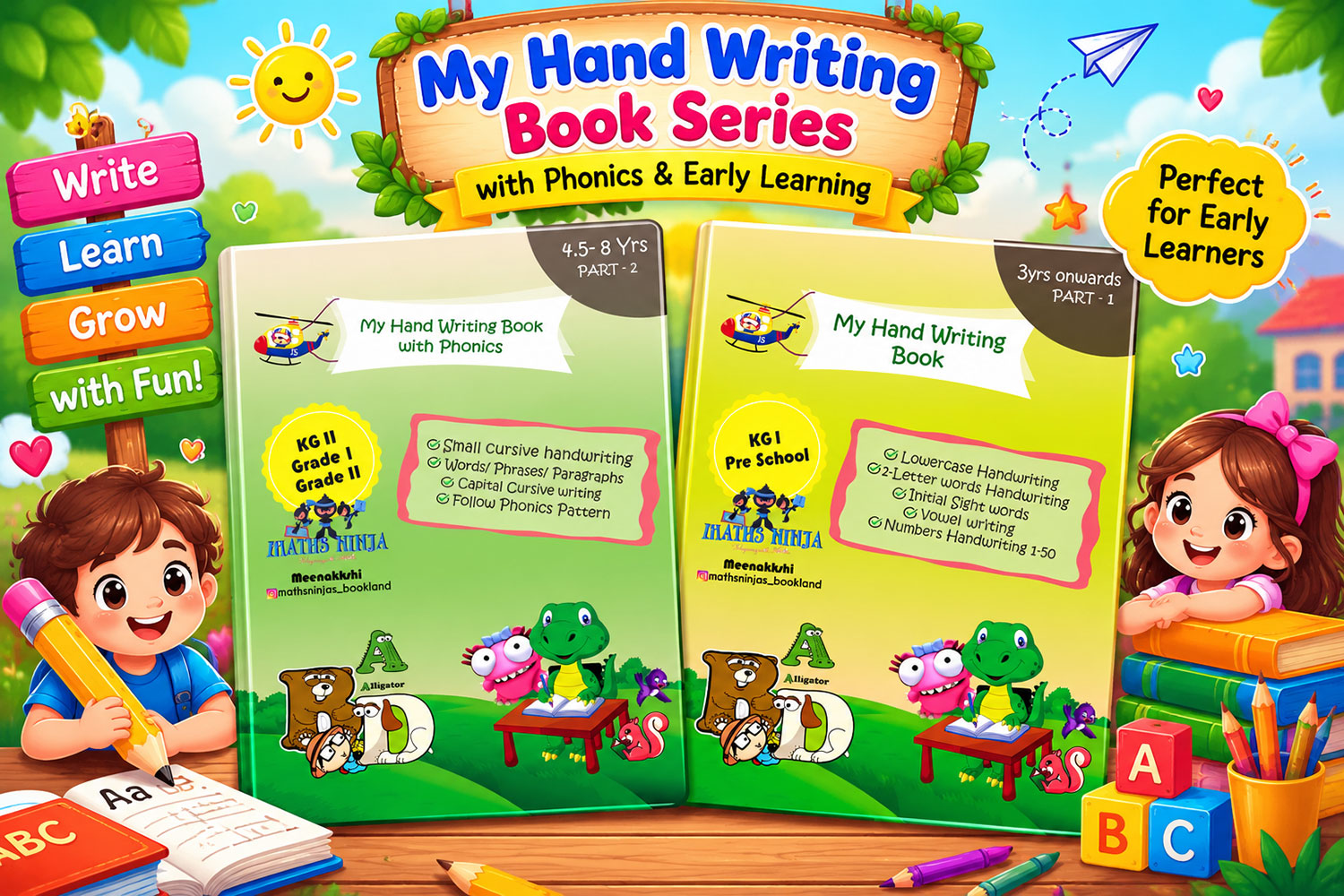
At Ninjas Bookland, parents can explore handwriting books for preschool kids that support early writing and tracing practice.
Why Is Handwriting Important for Preschool Kids?
Handwriting involves more than forming neat letters. It helps children develop fine motor skills, hand-eye coordination and familiarity with alphabet shapes. Drawing lines, colouring pictures and tracing letters allow children to practise controlled hand movements.
Regular handwriting activities can also prepare children for classroom writing tasks and help them become more comfortable with pencils and crayons. Small achievements, such as tracing a line or recognising a letter, can encourage children to continue learning.
What Is the Right Age to Start Handwriting Practice?
There is no single age when every child should begin formal handwriting exercises. Toddlers can start with scribbling, drawing and finger painting, while many children aged 3–5 gradually become ready for tracing lines, copying shapes and practising letters.
Begin with simple movements and introduce letters when your child is comfortable. Avoid forcing children to complete writing exercises before they are ready.
10 Easy Tips to Improve Your Child’s Handwriting
1. Start With Lines and Shapes
Before introducing the alphabet, encourage your child to draw vertical lines, horizontal lines, circles and curves. These movements provide practice for the basic strokes used in letter formation.
2. Choose Comfortable Writing Tools
Use age-appropriate crayons or beginner pencils that your child can hold comfortably. Demonstrate a relaxed pencil grip and provide gentle guidance instead of constantly correcting every movement.
3. Practise Tracing Activities
Tracing introduces children to letter shapes and controlled hand movements. Begin with large, simple patterns and gradually introduce alphabet tracing when your child is ready.
Parents can explore the Writing Books for Kids collection at Ninjas Bookland for additional practice resources.
4. Make Colouring Part of Learning
Colouring pictures allows children to practise hand movements in an enjoyable way. Encourage them to colour, draw patterns and create simple pictures without expecting perfection.
5. Use Play-Based Learning
Children often learn more comfortably through play. Try drawing letters in sand, making shapes with play dough or tracing large letters with a finger. These activities introduce writing movements without making learning feel like homework.
6. Introduce One Letter at a Time
Avoid teaching too many unfamiliar letters in one session. Demonstrate a letter, explain its shape and allow your child to try independently. Connect letters with familiar objects, such as A for apple or B for ball.
7. Create a Comfortable Writing Space
Choose a table and chair suitable for your child's size. Help your child sit comfortably with supported feet and enough space to move their writing hand freely. Allow breaks whenever needed.
8. Keep Practice Sessions Short
Preschoolers may become tired during long writing sessions. Start with around 5–10 minutes of enjoyable activities and adjust the duration according to your child's interest and comfort.
9. Praise Effort and Progress
Recognise your child's improvement rather than comparing their handwriting with others. Encouraging comments about their effort and pencil control can help them feel more confident about learning.
10. Include Writing in Everyday Activities
Invite your child to draw greeting cards, copy their name, label a picture or make a pretend shopping list. These activities show children that writing can be useful and enjoyable beyond the classroom.
Fun Handwriting Activities for Preschoolers
Simple activities at home can make handwriting practice more interesting while helping children develop early writing skills.
Sand Tray Letter Tracing
Fill a shallow tray with a small amount of suitable sensory material. Demonstrate a simple line or letter using your finger and invite your child to copy it. Supervise young children throughout the activity.
Play-Dough Letters
Help your child roll play dough into long pieces and arrange them into basic shapes or letters. This activity encourages hand movements and helps children become familiar with letter forms.
Follow the Dotted Lines
Draw dotted lines, curves and zigzags on paper. Ask your child to follow the patterns slowly with a crayon or pencil. Begin with simple paths and gradually introduce more challenging shapes.
Draw, Colour and Describe
Ask your child to draw a favourite animal or toy and colour the picture. Talk about the drawing and invite them to copy a related letter or familiar word if they are ready.
How to Choose the Best Handwriting Books for Preschool Kids
A suitable handwriting workbook can help parents organise practice and introduce writing gradually. Choose a book that matches your child's abilities and provides clear, easy-to-follow exercises.
For beginners, books with basic strokes, large tracing patterns and simple letter formation can be useful. Check whether the instructions are understandable and whether the pages provide enough space for children to practise comfortably.
Print and cursive handwriting involve different movements. Many beginners start with basic strokes and print letters before exploring cursive, depending on their development and preschool's approach.
Avoid books that introduce too many difficult exercises at once. The aim is to help children become comfortable with writing rather than complete as many pages as possible.
Recommended Handwriting Books at Ninjas Bookland
Parents looking for handwriting books for preschool kids can browse the Writing Books for Kids category at Ninjas Bookland.
The collection includes early writing and tracing resources, such as the Preschool Print Handwriting Book for children aged 3–5 and an English Phonics Cursive Writing Book.
Before purchasing, review the individual product description and age recommendations to ensure the book suits your child's current skills.
A Simple 7-Day Handwriting Practice Plan
| Day | Activity |
|---|---|
| Monday | Draw straight lines and simple shapes |
| Tuesday | Trace circles and curves |
| Wednesday | Practise finger tracing with sand or play dough |
| Thursday | Trace a few familiar letters |
| Friday | Colour pictures and draw patterns |
| Saturday | Complete a short workbook activity |
| Sunday | Repeat a favourite activity |
This is a flexible routine. Adjust the activities and duration according to your child's interest, attention span and comfort.
Common Handwriting Mistakes Parents Should Avoid
Avoid expecting perfect handwriting too early or forcing children to complete long practice sessions. Preschoolers are still developing the coordination needed for controlled writing.
Do not compare your child with other children or correct every small mistake. Instead, offer gentle guidance, celebrate progress and allow children to practise at their own pace.
If your child regularly experiences pain, unusual fatigue or significant difficulty using writing tools, consider discussing your concerns with a qualified paediatrician or occupational therapist.
